Developing Communities


The community is central to our approach and how we carry out our projects in the countries where we operate. We collaborate with well-established community-based organisations, typically Christian Churches, that share our vision of alleviating poverty among disadvantaged children, orphans and women in need, and are also able to operate well managed and comprehensively monitored projects.
In addition to educating children and empowering women in need in the community, our aim is to bring about development by carrying out projects in education, sanitation and health by working with local schools.
Some of our community projects include:
Dignity for Girls (Period Poverty) Project
This project addresses a global development issue that has serious consequences for girls across sub-Saharan Africa, which is lack of access to affordable menstrual products or the means to manage their periods. This phenomenon, known as ‘Period Poverty’ means millions of girls are staying home from school during their menstruation, losing up to 20% of the school year. This hinders girls’ progress in education, and leads to high drop out rates, child marriage and early-age pregnancy.
Dignity for Girls, Nigeria
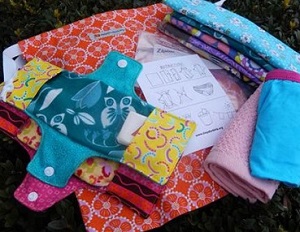
In 2022, this project directly benefitted 1,500 girls from 5 secondary schools in Ayobo-Ipaja, Lagos State. The girls attended workshops on menstrual health management, human rights and career planning, and at the end, were given ‘Dignity Packs’ comprising of reusable pads and hygiene products. The packs were made by local women, trained to produce them as part of the project. In addition, 1,000 boys from the same schools attended parallel workshops, designed to educate them about puberty and the need for mutual understanding and respect between boys and girls.
 Ulemu (Dignity for Girls), Malawi
In 2018, we piloted this project in Phalombe District (South-East Malawi). We worked with 2 schools, primary and secondary, to deliver workshops to 1,379 girls about menstrual health management, human rights and career-planning, with 90 boys attending the parallel workshops. Like in Nigeria, the girls were also provided with reusable pads and panties produced by local women groups.
The Summer School Project, Nigeria
Since 2019, ACT has supported an annual summer school, held every August, for children from the Ayobo-Ipaja communities in Lagos state. This project provides the opportunity for vulnerable children, many of whom are orphans we already support, to come together during the long school holiday and participate in academic, social, and sporting activities. This is important as it provides them an enjoyable break from school, whilst aiding their development, and preparing them for the academic year ahead. Another benefit is that it keeps very vulnerable children away from the streets and exposure to exploitation, abuse or crime.
Between 2009 and 2011, ACT set up computer laboratories in 7 community secondary schools across Tanga (North-East Tanzania). They were equipped with a total of 100 computers, benefitting around 14,000 pupils. 35 UK volunteers trained 155 teachers in ICT (Information and Communication Technology) and hardware maintenance as part of this project, who are now able to teach ICT to the children at the schools.
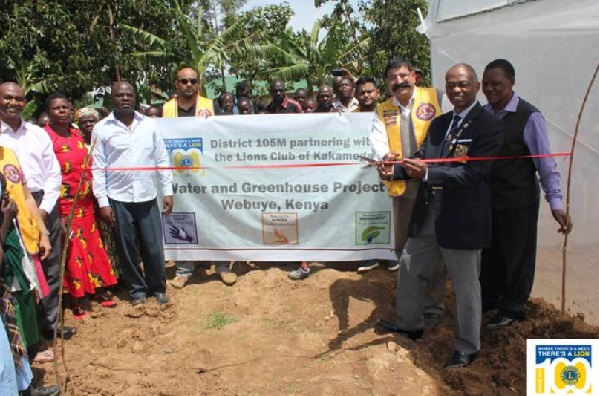
In 2017, ACT worked with our local partner to build a 3-kilometre-long pipeline to connect 3 villages in Sitikho, Bungoma county (West Kenya) to the water mains. Nearly 9,000 people now have access to clean water, including the 850 children and staff at Bukunjangabo Primary School. The water is also used by women in the community to irrigate their crops in a greenhouse project funded by ACT.