22 YEARS OF ACT IN NIGERIA
by ACT
Posted on May 27, 2022
Comments Off on 22 YEARS OF ACT IN NIGERIA
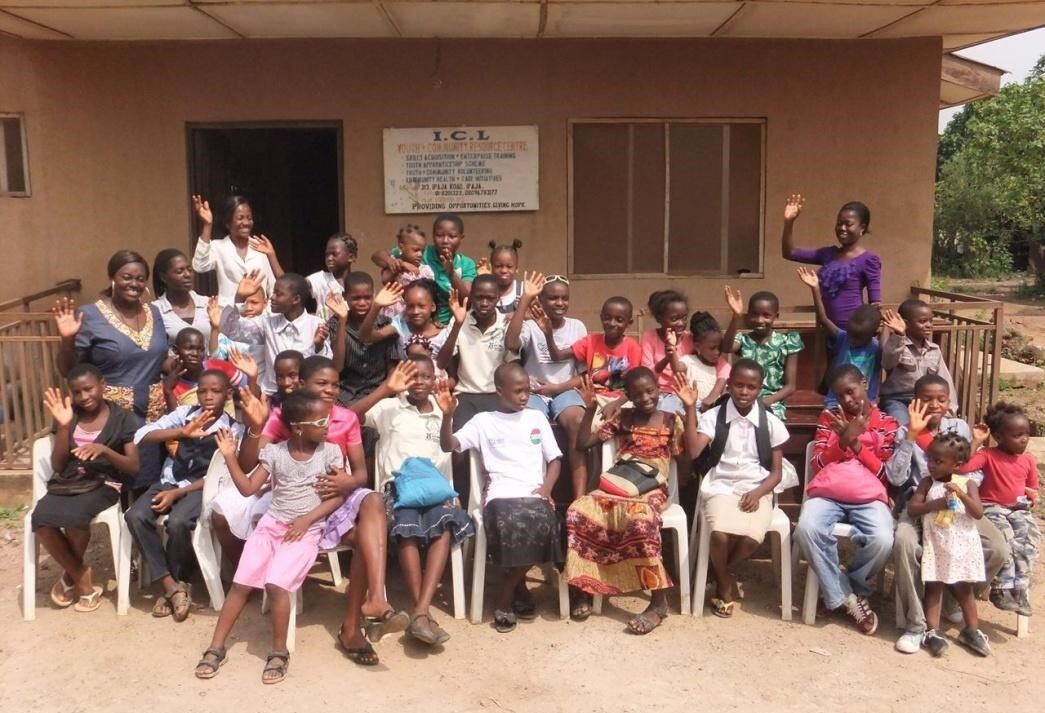
On his first visit abroad in almost three years because of the Covid pandemic, last week in mid- May, ACT Director, Kunle, was in Lagos State, Nigeria visiting the children and women we support and meeting with the partners that were collaborating with on our various projects in the country. It’s an event that has inspired us to reflect on lessons learned through ACT’s activity in this complex, sprawling city over the past 22 years.
Nigeria is the most populated country in Africa, with each Nigerian representing one of every four Africans. It is also a wealthy country, with a large economy rich in petroleum and other natural resources. Still, economic inequality has reached extreme levels and vulnerable communities, like Ayobo-Ipaja, continue to suffer from poverty and deprivation.
Lagos, the economic capital of Nigeria, is characterised by stark wealth disparities. While the prosperous areas of the city display significant affluence, not far away are shanty towns where there is abject poverty. Communities like Ayobo-Ipaja in Alimosho local government area where ACT is working have little to no infrastructure and poor standards of living. Many of the residents lack access to clean water and proper sanitation; families often do not have sufficient resources to send their children to school or sustain their education.
How we started
Formed in 1998, it was in 2000 that ACT began working in Nigeria, first in collaboration with Olive Tree parish, at the time a growing church based in Ikoyi, a wealthy part of Lagos and five years later, also with Bethesda, the missions’ arm of TPH (This Present House) based in Lekki another affluent area of Lagos. Both were seeking to help poor disadvantaged children in the deprived outlying areas of the city. ACT worked with them to set up our first child education sponsorship projects in Lagos, providing full education and welfare support for 64 children through the two partnerships with 144 siblings also benefitting indirectly from the welfare support, including food and clothing that we provided.
But it soon became apparent that this dispersed approach was not working for us. ACT works best when based in the community where our beneficiaries live. But our partners were not themselves based in the children’s communities. They worked by finding children to sponsor in separate parts of the city, often quite far away from each other. This meant that the projects lacked a community spirit as the children only interacted when invited to specific events, usually when ACT came to visit. It also meant that ACT was unable to initiate projects to develop local communities – whether through skills training, income generation or water and sanitation infrastructure.
Lessons learnt
This brought home to us the need to stick firmly to our community-based approach and not digress from it. It means working only with partner organisations that are well-established within the local community and which are best placed to identify households in their community with the most need. It also means that our project coordinators will have a strong connection to the community to oversee the project and the beneficiaries on the ground – a position often held by health workers, teachers or community parish leaders.
This grass-roots approach allows us to provide holistic support to communities and break the cycle of poverty. Ideally, we aim to run multiple projects in a single community that target some of the structural inequalities that keep the most vulnerable households in poverty.
Our work in Ayobo-Ipaja Community
Located on the mainland on the northern edges of Lagos State, bordering with Ogun State, Ayobo-Ipaja fits well into our model of a community. It is a local community development area (LCDA) in the Alimosho local government authority (LGA). Alimosho with a population estimated at about 11.5 million inhabitants is the largest LGA in Nigeria. Squalid, overcrowded and inhabited by very poor people, it is a catchment for migrants coming to Lagos from the hinterland seeking work opportunity in the commercial capital of the nation. The area is characterised by densely packed housing units of poor quality and often lacking in basic infrastructure and facilities such as water.
ACT began working in Ipaja in 2011 in partnership with Ipaja Community Link (ICL), recently renamed Community Development Link, Ipaja. About one hundred and forty (140) children in one hundred and twenty-four (124) women led households are direct beneficiaries of our sustained education and welfare support. Three hundred and fifty-seven (357) siblings are benefitting indirectly from the welfare and income generation support. Our work is now expanding into neighbouring Ayobo, through some our more recent projects. CDLI provide us with crucial local knowledge, skills and experience to locate the most vulnerable households, identify development gaps, and implement projects to transform this community.
Current Projects
Dignity for Girls (Period Poverty) Project
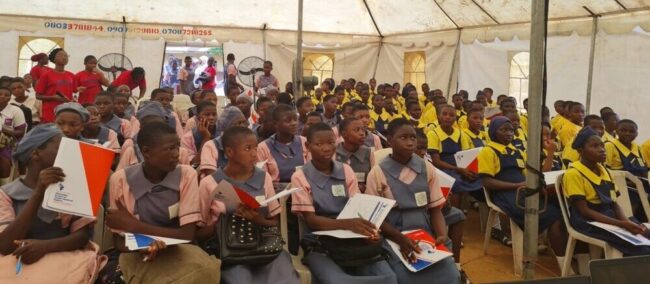
1500 girls from 5 community secondary schools are taking part in workshops on menstrual health education and management.
 This aims to address the lack of awareness about menstrual health management within the community. It seeks to highlight the phenomenon of girls dropping out of education when reaching puberty due to poor sanitation infrastructure, shame and lack of support surrounding menstruation, and no access to sanitary pads. The project provides a series of workshops on menstrual health education and management for both girls and boys in 5 community secondary schools in Ayobo-Ipaja. The girls are provided with Dignity packs containing sets of reusable menstrual pads, soaps and deodorant. The bags are produced by women in the community as part of our women income generation activity.
Solar Borehole Project
The Nigerian Society of Engineers (UK) is collaborating with ACT to provide solar-powered boreholes with overhead tanks to supply 10,000 litres of clean water per day in an area of Ayobo-Ipaja without an electricity grid connection. This will provide a solution to the unavailability of water.
Summer School
Investment One – a finance management company in Nigeria has granted ACT N2 million (about £3,000) ACT to fund a free summer school programme during school vacation in August that will benefit about 250 vulnerable and at-risk children in the Ayobo-Ipaja communities and keep them off the streets. The summer school consists of educational programmes, art and crafts, games and sports and development activities that will provide learning and fun for the children.
ACT is for the people otherwise forgotten
There are many vulnerable children, orphans and fatherless, in the 8 African countries where we work that will not have the opportunity of an education without support.
For just £15 a month you can sponsor a child to receive an education and provide school items like uniform, shoes and a school meal each day. In this way you can help them to reach their potential in life. Please consider sponsoring a child through ACT. To sponsor a child or to donate please click here.
Thank you.
