International Day of Families 2021
by ACT
Posted on May 14, 2021
Comments Off on International Day of Families 2021
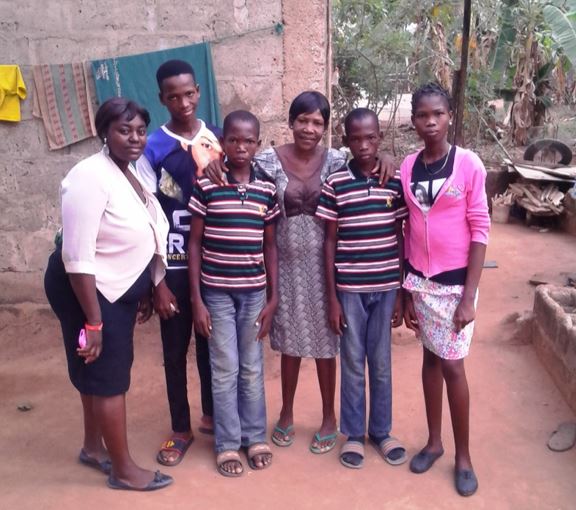
The Enobong family with Yetunde, project director (L)
International Day of Families is a United Nations International day which began in 1993. The day was created to raise awareness of the issues relating to families and to increase knowledge of the social, economic, and demographic processes affecting families.
This year’s theme is ‘Families and New Technologies’, with a focus on how new technologies impact the well-being of families. This comes at a poignant time, as the Coronavirus pandemic has magnified the global disparities in the access to technology and demonstrated how that continues to affect families across the world.
The Coronavirus has exacerbated the number of children already out of school by putting up a technological barrier in the access of education following the closures of schools across the globe. This has disproportionately affected children living in rural communities, who unlike their urban student counterparts, did not have the option to access their classroom lessons via conference call apps like Zoom, or even the government education programmes via the internet, television or radio. These technological tools are inaccessible for poor families because of the costs. In many cases there is also lack of access to electricity.
The dictionary defines a family as a group of one or more parents and their children living together as a unit. We recognise that families come in many different forms, but ultimately all are fundamental in shaping a child’s development.
Family is important to ACT
International Day of Families is important to us at ACT because our work is centred around families. These can range from women-led families, guardian-led families, grandparent-led families (usually elderly grandmothers) and at times even child-led families where the eldest child becomes the head of the household. The families that we support tend to stray away from the typical ‘nuclear’ family often portrayed with a mother, father and their children. But that doesn’t make them any less of a family. In fact, it highlights the unique makeup that families can have. But they all have one thing in common- their foundation is always that of love.
We have witnessed children who live with their elderly grandparents, who physically are not able to look after them as well as they would like to. Instead, through the help of our country partners who work within the local communities, they are brought to our attention where we provide the educational and welfare support that their families are not able to give them, through no fault of their own.
We support children from fatherless and women-led homes. The significance of this distinction is in the reduced economic capabilities of homes led by women than that of homes led by men. Traditionally, in the 8 African countries that we work in, men are the breadwinners (highest earner) if not, the sole earner of the house. This means that everyone in that household is reliant on the earnings of the father, for all their necessities.
So, what happens to a family unit when a father passes away?
The widowed mother is left to provide financially for her family, in what is typically a low paid job. Or if both parents aren’t present, this leaves the children orphaned and unable to look after themselves. Both situations put families in incredibly vulnerable and disadvantaged positions. Which is why we’re here, to alleviate the pain felt by families who have succumbed to hardship caused by the structure of their family.
We work with partners based in close-knit rural communities across Africa to support vulnerable children and women who have been widowed. Sponsorships and donations are used to connect donor families from the UK to vulnerable children and orphans in Africa. Thereby providing them support in ways that their own families aren’t able to provide them and giving them hope for the possibility of a greater future.
Celebrate International Day of Families by donating or sponsoring a child’s education and sowing a seed in their future here.
